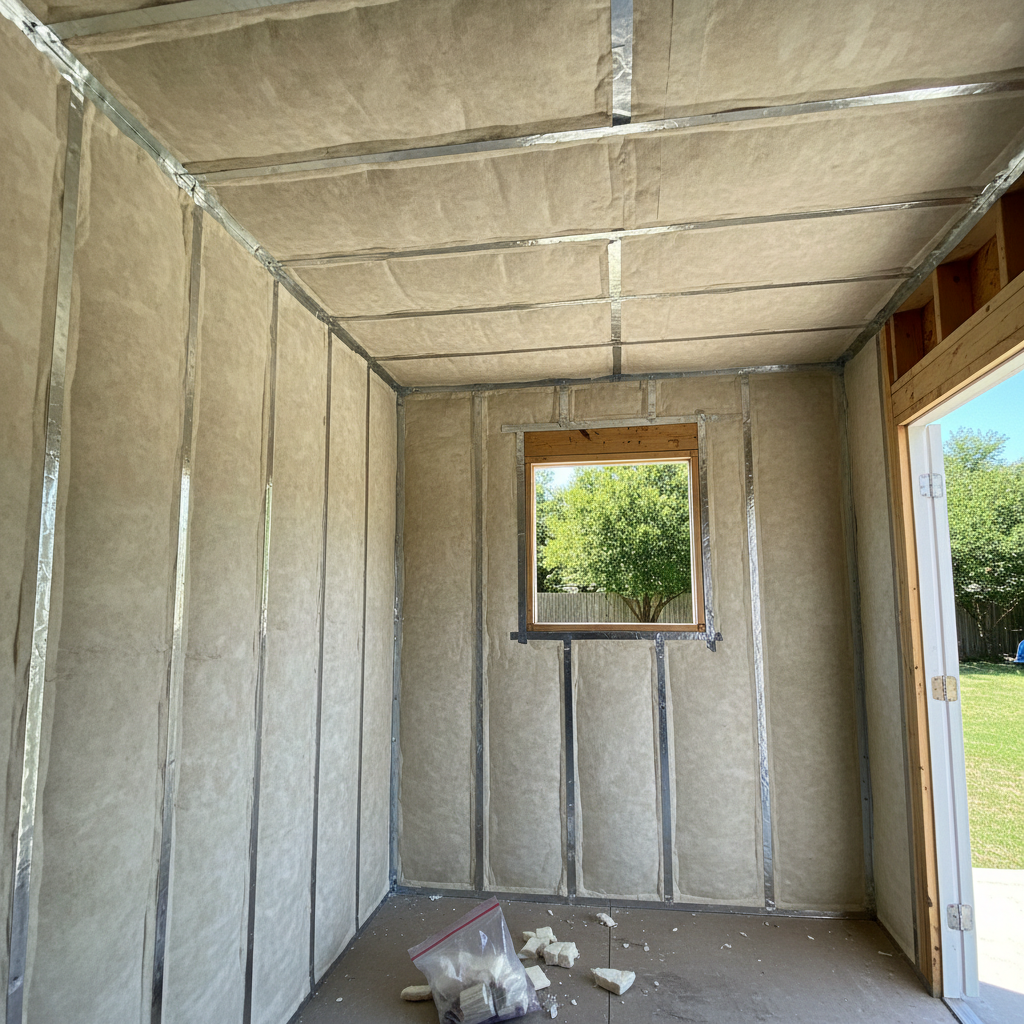
Insulating a shed might seem straightforward, but I've seen plenty of Austin homeowners make some real head-scratchers that end up costing them more in the long run. Whether you're trying to keep your tools from rusting in the summer humidity or make a backyard office usable year-round, getting your shed's insulation right is key. Here are the biggest blunders I see, and how you can steer clear of them.
Ignoring the "Whole System" Approach
A lot of folks think insulation is just about stuffing some fiberglass in the walls. That's a huge mistake, especially here in Austin where our summers are brutal and our humidity is relentless. Your shed is a mini-house, and it needs to be treated like one. You can't just insulate the walls and call it a day. You've got to think about the roof, the floor, and ventilation.
- The Roof: Heat rises, right? So, if your roof isn't insulated properly, all that cool air you're trying to keep inside is just going to escape, or all that scorching sun is going to bake your shed from above. A radiant barrier or proper roof insulation is non-negotiable.
- The Floor: Especially if your shed is sitting directly on a concrete slab or even on piers, you're losing a lot of conditioned air through the floor. Cold in winter, hot in summer. Insulating the floor joists or under a raised subfloor makes a massive difference.
- Ventilation: This is huge in our climate. Without proper ventilation, you're just trapping hot, humid air inside, no matter how much insulation you put in. You need to allow for air movement to prevent moisture buildup and mold, especially in those older sheds that might not have a vapor barrier. Think ridge vents, soffit vents, or even a small exhaust fan if you're going for a conditioned space.
Choosing the Wrong Type of Insulation for the Job
Not all insulation is created equal, and what works great in your house might not be the best fit for your shed. I've seen people throw in cheap batt insulation only to have it sag, get damp, and become a haven for pests within a year or two. That's a waste of money and effort.
For sheds, especially here in Austin where we get those wild temperature swings and high humidity, you need something robust. Closed-cell spray foam, which is what we specialize in at Austin Spray Foam Solutions, is often your best bet. Why? It creates an airtight seal, acts as a vapor barrier, and has a high R-value in a small space. It won't sag, it's not a food source for critters, and it handles moisture much better than traditional options. If spray foam isn't in the budget, rigid foam boards are a good alternative, but you'll need to seal all the seams meticulously.
Forgetting About Air Sealing
This goes hand-in-hand with the