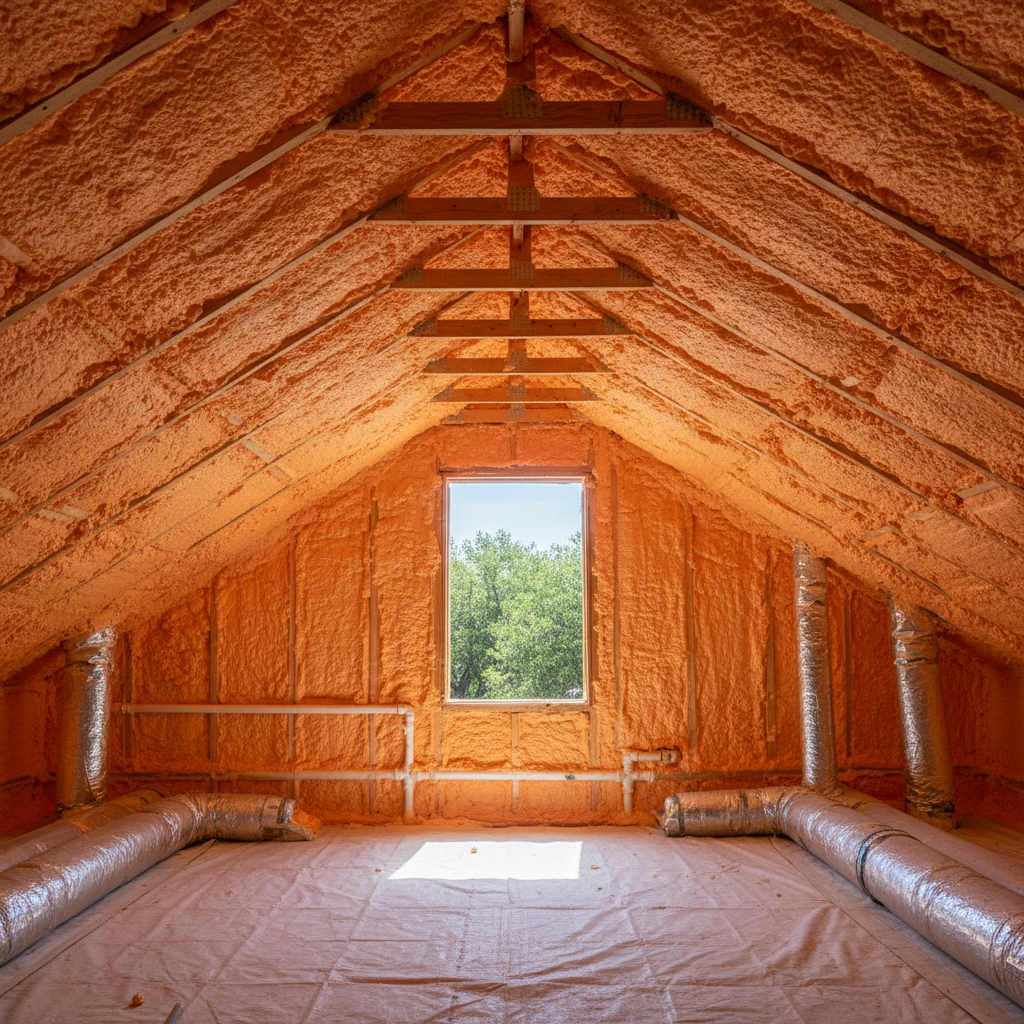
Timing matters a lot when you are looking to upgrade your home thermal envelope in Austin, TX. Down in Central Texas, we deal with intense heat waves, sudden blue northers, and stubborn humidity that can cause delays in construction projects if you do not pay attention. When you are investing in Closed-Cell Spray Foam Insulation, understanding how local weather patterns affect the chemical reaction is very important.
Closed-Cell Spray Foam Insulation is very effective when it comes to stopping air infiltration and adding structural rigidity, but it is picky about its environment during application. The chemical components need proper ambient and substrate temperatures to cure correctly. If it is very hot on a July afternoon in Travis Heights and your unconditioned attic is pushing 140 degrees, that foam will react much too fast. You end up with improper expansion, a brittle cell structure, or poor adhesion to the framing.
When to Schedule Your Installation
Spring and fall are typically the best times for scheduling Closed-Cell Spray Foam Insulation work in this part of Texas. During these shoulder months, outdoor temperatures usually hover in a comfortable range, giving us a much better window to control conditions inside the building envelope. You will not be fighting the brutal triple-digit heat that makes summer applications tricky, nor are you dealing with the rare freezing winter mornings that can stall out a project.
If you are stuck doing a project during the dead of summer, Lone Star Spray Foam Insulation usually has to start early in the morning to beat the heat buildup in the roof deck. Substrate temperature is what really dictates whether we can spray or not. If the wood or metal framing is too hot to the touch, Closed-Cell Spray Foam Insulation will not bond the way it is supposed to.
Protecting Your Investment Year-Round
Once Closed-Cell Spray Foam Insulation is cured, it is very durable. It acts as a built-in vapor barrier and will not sag or hold moisture like traditional batts. But you still need to keep an eye on a few things to protect your investment over the long haul:
- Keep UV rays away from exposed Closed-Cell Spray Foam Insulation, as sunlight will degrade it over time.
- Check your roof for leaks after heavy spring storms, since Closed-Cell Spray Foam Insulation stops air but you still want to protect your framing from water damage.
- Monitor indoor humidity levels, especially if you live closer to the greenbelts where moisture tends to linger.
For homes and businesses in Austin, Lone Star Spray Foam Insulation provides Closed-Cell Spray Foam Insulation services that make all the difference in keeping utility bills manageable when August rolls around. Give us a call when you are ready to map out your next project, and we will make sure the weather works in your favor.