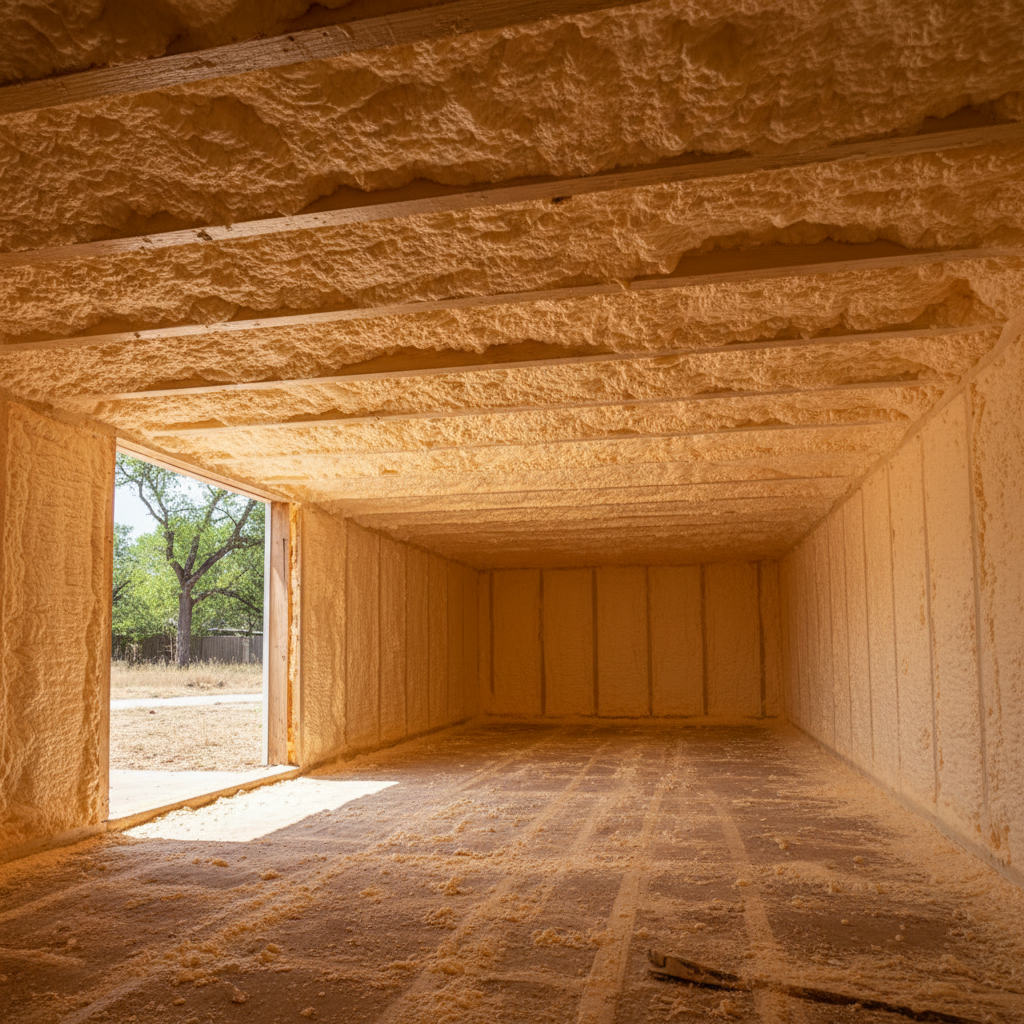
You're probably wondering what closed-cell spray foam is actually going to cost you here in Austin. It's a fair question, and frankly, a lot of folks just give you vague answers. I'm not going to do that. I'm going to tell you what I've seen, what affects the price, and how to make sure you're getting a good deal.
What Even Is Closed-Cell Spray Foam?
Before we talk money, let's just quickly cover what we're dealing with. Closed-cell spray foam is dense stuff. It's got tiny, sealed cells that are packed together, making it super rigid. This isn't your fluffy open-cell foam. Because it's so dense, it's a fantastic air barrier, a vapor barrier, and it adds structural integrity. It's got a higher R-value per inch compared to open-cell, usually around R-6 to R-7 per inch. That means you don't need as much of it to hit your insulation targets, which is a big deal in tight spaces like crawl spaces or rim joists.
What Drives the Price Tag?
A few big things push the price up or down. It's not just about how many square feet you're covering.
The Thickness (R-Value) You Need: This is probably the biggest factor. The more R-value you want, the thicker we spray, and the more material we use. For an attic in Austin, you might be looking at R-20 to R-30, which means 3 to 5 inches of closed-cell foam. A crawl space might only need 2 inches for an R-13.
Total Square Footage: Seems obvious, right? More area means more material and more labor. But sometimes smaller, more intricate jobs can cost more per square foot because of the setup and detail work involved.
Accessibility: Is it an easy-to-reach attic, or are we crawling through a tight, dusty crawl space under an old bungalow in Hyde Park? Difficult access means more labor, specialized equipment, and takes more time. If we're talking about a 100-year-old house with a super low foundation, that's going to be tougher than a new build with wide-open spaces.
Prep Work Required: We've got to make sure the area is clean, dry, and ready for foam. If there's old insulation to remove, or a bunch of junk to clear out, that's an added cost. We also need to protect surrounding surfaces from overspray, and that takes time and materials.
Current Material Costs: Like everything else, the chemicals used to make spray foam fluctuate in price. We don't control that, but it definitely impacts what we charge.
Typical Cost Ranges in Austin
Alright, let's get down to some numbers. Keep in mind, these are averages, and your specific project might be higher or lower. I'm talking about installed costs here, not just the material.
Walls (New Construction/Open Cavity): You're often looking at 2-3 inches for R-13 to R-20. This usually runs about $2.00 to $3.50 per board foot. A board foot is 1 foot x 1 foot x 1 inch thick. So, if you need 2 inches, multiply that by 2. For a typical 1,500 sq ft home, that could be anywhere from $10,000 to $20,000 for exterior walls alone, depending on the R-value and complexity.
Attics (Roof Deck): For an unvented attic, we're usually spraying 3-5 inches for R-20 to R-35. Expect to pay around $2.50 to $4.50 per board foot. A 1,500 sq ft attic (floor area, not roof area) might cost you between $12,000 and $25,000. This is where you'll see huge energy savings, especially with our long Austin summers.
Crawl Spaces/Rim Joists: Often just 2 inches for an R-13. This is usually priced by the square foot of surface area being sprayed, or sometimes by the board foot, but it's a smaller area. For a crawl space, you might see prices from $3.00 to $5.00 per square foot of sprayed surface. A 1,000 sq ft crawl space could be $3,000 to $5,000.
So, for a typical 2,000 sq ft home needing attic and wall insulation, you could be looking at a total project cost anywhere from $20,000 to $40,000. Yeah, it's an investment, but the energy savings and comfort are real.
What Should Be Included in Your Quote?
When you get a quote from Austin Spray Foam Solutions or anyone else, make sure it's detailed. Don't accept a one-liner price. Here's what you should expect:
Specific R-Value and Thickness: It should clearly state how many inches of foam they plan to spray and what the estimated R-value will be.
Total Square Footage/Board Footage: The exact areas being sprayed and the calculated quantity of material.
Prep Work Details: What they'll do to get the area ready, including masking, sealing off HVAC, and any debris removal.
Cleanup Plan: How they'll leave your property when they're done.
Warranty Information: What kind of guarantee they offer on their work and the product.
Permits (if required): Who is responsible for pulling necessary permits with the city of Austin.
How to Avoid Overpaying
Nobody wants to get ripped off, especially on a big home improvement project. Here's my advice:
Get Multiple Quotes: Don't just go with the first company you call. Get at least three detailed quotes. This helps you compare apples to apples and understand the market rate.
Ask for References: A reputable company will happily provide them. Talk to their past customers.
Check Credentials: Make sure they're licensed and insured. Ask about their training and experience with closed-cell foam specifically.
Understand the R-Value: Don't just compare prices. Compare the R-value you're getting for that price. A cheaper quote might be for less insulation.
Don't Be Afraid to Ask Questions: If something in the quote doesn't make sense, ask for clarification. A good contractor will take the time to explain it to you.
Look for Local Expertise: Someone who knows Austin's climate, building codes, and even the quirks of older homes (like those pier-and-beam foundations in Zilker) is going to do a better job than an out-of-towner.
Closed-cell spray foam is a serious investment, but it pays off in comfort and energy savings. Do your homework, ask the right questions, and you'll find a contractor who gives you a fair price for quality work.