Why Insulate Your Austin Garage Anyway?
Look, your garage isn't just for parking cars anymore, is it? For a lot of us here in Austin, it's a workshop, a home gym, a storage overflow, or even a band practice space. And let's be honest, those summer temperatures in July and August? They turn an uninsulated garage into an oven. Winter mornings aren't much better, are they? Insulating it can make a huge difference, not just for comfort but for protecting anything stored out there from our wild Texas weather swings. Plus, if your garage shares a wall with your living space, insulating it properly can actually help keep your whole house cooler or warmer, saving you some cash on your energy bills.
What Drives the Price Tag?
You want to know what it's gonna cost, right? Well, it's not a one-size-fits-all number. A few things really push the price around:
- Garage Size: This is a no-brainer. A small single-car garage will cost less than a massive three-car setup. We measure by square footage for walls and ceilings, naturally.
- Insulation Type: This is probably the biggest factor. You've got options: fiberglass batts, blown-in cellulose, and spray foam. Each has its own price point and performance level, of course.
- Where You're Insulating: Are we just doing the garage door? Only the walls? Or are we tackling the ceiling, too? The more surfaces, the more material and labor it takes.
- Existing Conditions: If we have to remove old, crappy insulation, that's extra labor and disposal costs. If there's a bunch of junk in the way, or if the space is super cramped, that can add to the time and effort.
- Accessibility: Is it easy to get to the areas that need insulating? High ceilings or awkward angles can make a job take longer.
- R-Value Goals: The higher the R-value (which means better insulation performance), the more material you'll need, which means a higher cost.
Typical Cost Ranges for Garage Insulation in Austin
Alright, let's get down to some numbers. Keep in mind these are averages, and your specific project might be a bit different. These prices usually include materials and installation.
Fiberglass Batts: This is your most budget-friendly option. For a typical two-car garage (around 400 sq ft of wall space, 200 sq ft of ceiling), you're usually looking at anywhere from $800 to $1,800. It's relatively quick to install, but it's not the best for air sealing.
Blown-in Cellulose: A step up from batts, especially for ceilings and hard-to-reach spots. It offers better air sealing than batts. For that same two-car garage, you might pay between $1,200 and $2,500.
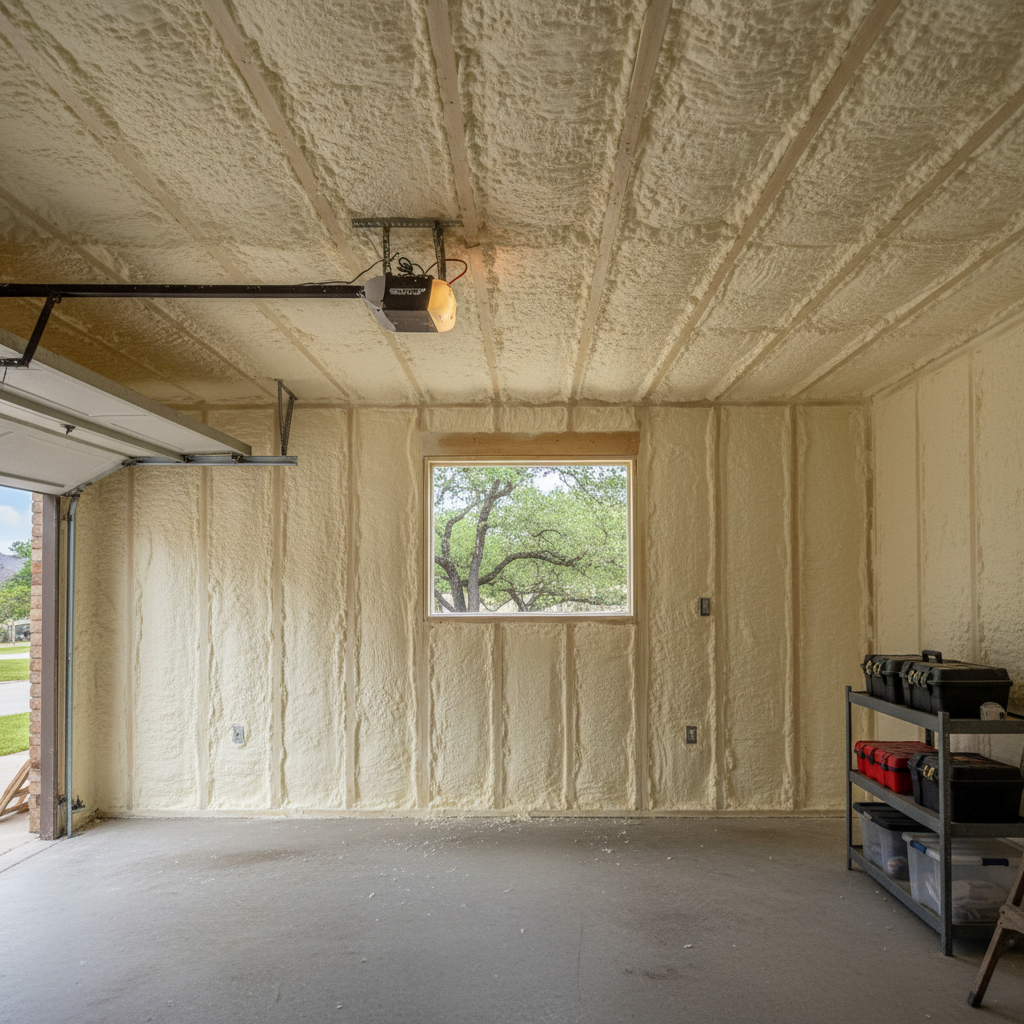
Spray Foam Insulation: This is the Cadillac of insulation, especially for our Austin climate. It provides an excellent thermal barrier and air seal, which is crucial for keeping out that humid air. For a two-car garage, you're generally looking at $2,500 to $5,000+. Yes, it's more upfront, but the energy savings and comfort are significant. With spray foam, especially closed-cell, you're not just insulating, you're also adding structural rigidity and a vapor barrier. It's a premium product for a reason.
Insulating a Garage Door: If you're just doing the door, you can often buy DIY kits for a few hundred bucks. Professional installation for a standard two-car garage door might run you $300 to $800, depending on the type of insulation and the door's construction.
Remember, these are rough estimates. A small, unattached single-car garage in South Austin might be on the lower end, while a large, attached three-car garage in Westlake with high ceilings could easily hit the higher end of these ranges, especially with spray foam.
What Should a Good Quote Include?
When you get a quote from me or any other reputable contractor, here's what you should expect to see:
- Detailed Scope of Work: Exactly what areas will be insulated (walls, ceiling, door, etc.).
- Type of Insulation: Clearly state fiberglass, cellulose, or spray foam (and if it's open-cell or closed-cell).
- R-Value: What R-value will be achieved in each area.
- Square Footage: The total area being covered.
- Material Costs: The cost of the insulation itself.
- Labor Costs: What they're charging for the installation.
- Prep Work: If they need to remove old insulation or do any other prep, it should be listed.
- Cleanup & Disposal: Confirmation that they'll clean up their mess and get rid of any old materials properly.
- Warranty Information: What kind of guarantee they offer on their work or the materials.
- Total Price: The final, all-in cost.
How to Avoid Overpaying
Nobody wants to get ripped off, especially not here in Austin where every dollar counts. Here's my advice:
Get Multiple Quotes: Don't just go with the first guy who shows up. Get at least three detailed quotes from different contractors. This helps you compare apples to apples.
Ask About Experience: Has the contractor done garage insulation specifically? Do they know our local building codes and climate challenges? You want someone who understands how to deal with that brutal Austin heat.
Check References and Reviews: See what other people are saying. Google reviews, Yelp, BBB – they're all good places to look.
Understand the R-Value: Don't just ask for